
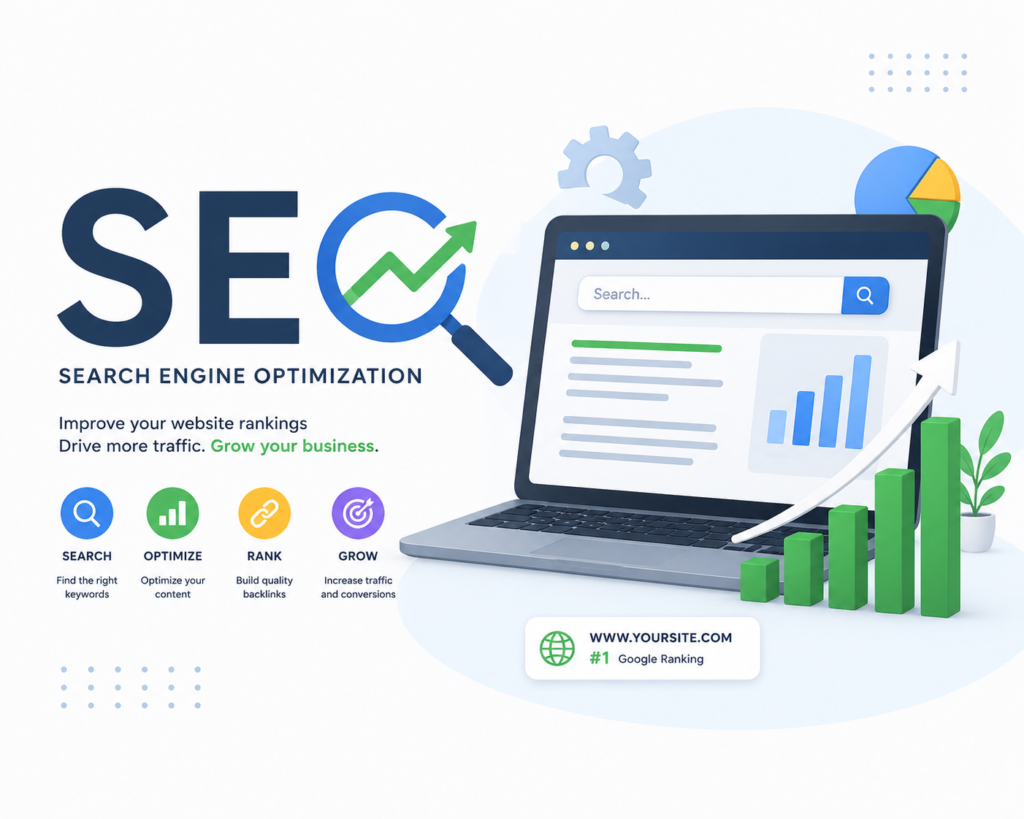
What is SEO? A Complete Beginner’s Guide to Search Engine Optimization
In today’s digital world, having a website is not enough. If people cannot find your website on search engines, you are missing valuable traffic, leads, and sales. This is where SEO (Search Engine Optimization) becomes important. SEO helps websites rank higher on search engines like Google, making it easier for users to discover relevant content.
What is SEO?
SEO (Search Engine Optimization) is the process of improving a website’s visibility in organic (non-paid) search engine results. The goal of SEO is to attract targeted visitors by optimizing website content, structure, speed, and authority.
When users search for products, services, or information online, search engines display the most relevant results. SEO helps your website become one of those results.
Why is SEO Important?
SEO is important because it:
- Increases website visibility
- Drives organic traffic
- Builds trust and credibility
- Improves user experience
- Generates leads and sales
- Provides long-term marketing results
- Offers better ROI compared to many paid advertising methods
In 2026, businesses that invest in SEO continue to gain a competitive advantage in the digital marketplace.
How Do Search Engines Work?

Search engines follow three main steps:
1. Crawling
Search engine bots discover and scan web pages across the internet.
2. Indexing
The collected information is stored in a massive database called an index.
3. Ranking
When a user performs a search, algorithms analyze hundreds of factors to determine which pages deserve the highest positions.
The better your website meets these ranking factors, the higher it appears in search results.
Types of SEO
1. On-Page SEO
Optimizing content, titles, meta descriptions, headings, images, and keywords within your website.
2. Off-Page SEO
Building authority through backlinks, brand mentions, social signals, and online reputation.
3. Technical SEO
Improving website speed, mobile-friendliness, security, crawlability, and indexing.
4. Local SEO
Optimizing a business for location-based searches and Google Business Profile visibility.
5. E-commerce SEO
Optimizing product pages, categories, and shopping experiences for online stores.
Key SEO Ranking Factors in 2026
Search engine algorithms continue to evolve. The most important ranking factors include:
- High-quality and helpful content
- Search intent optimization
- Mobile-first website design
- Fast page loading speed
- Core Web Vitals performance
- Strong backlink profile
- Website security (HTTPS)
- User experience (UX)
- Internal linking structure
- E-E-A-T (Experience, Expertise, Authoritativeness, Trustworthiness)
- AI-enhanced content quality and relevance
- Voice search optimization
Best SEO Practices for Beginners
Create Valuable Content
Focus on solving user problems rather than stuffing keywords.
Perform Keyword Research
Identify keywords your target audience actively searches for.
Optimize Title Tags and Meta Descriptions
Write compelling titles that encourage clicks.
Improve Website Speed
Fast websites provide better user experiences and rankings.
Use Internal Links
Connect related pages to improve navigation and SEO authority.
Optimize for Mobile Devices
Ensure your website works perfectly on smartphones and tablets.
Update Content Regularly
Fresh and accurate information improves visibility and engagement.
Common SEO Mistakes to Avoid
- Keyword stuffing
- Duplicate content
- Ignoring mobile optimization
- Slow-loading pages
- Poor website structure
- Missing meta descriptions
- Buying low-quality backlinks
- Ignoring technical SEO issues
- Publishing thin or low-value content
- Not tracking SEO performance
Avoiding these mistakes can significantly improve your website’s ranking potential.
The Future of SEO

The future of SEO will be shaped by Artificial Intelligence, voice search, personalized search experiences, and user-focused content. Search engines are becoming smarter at understanding context, intent, and content quality.
Businesses and marketers who prioritize helpful content, strong user experiences, and ethical SEO practices will continue to achieve sustainable growth in 2026 and beyond.
Conclusion
SEO remains one of the most powerful digital marketing strategies for businesses, bloggers, and brands. By understanding how search engines work, implementing the right SEO techniques, and avoiding common mistakes, you can increase visibility, attract qualified traffic, and achieve long-term online success.
SEO is no longer just about rankings—it’s about delivering valuable experiences that help users find exactly what they need.
Author

Digital Marketing Professional and SEO Enthusiast passionate about helping businesses grow through effective search engine optimization, content marketing, and online visibility strategies.